
Key turns but the car won't start, or the steering wheel is locked: what it means and what to do
A locked steering wheel or a key that does nothing is usually the steering lock, the ignition or the immobiliser, not the engine. Here's how to tell which, what you can check in two minutes, and what the repair involves.
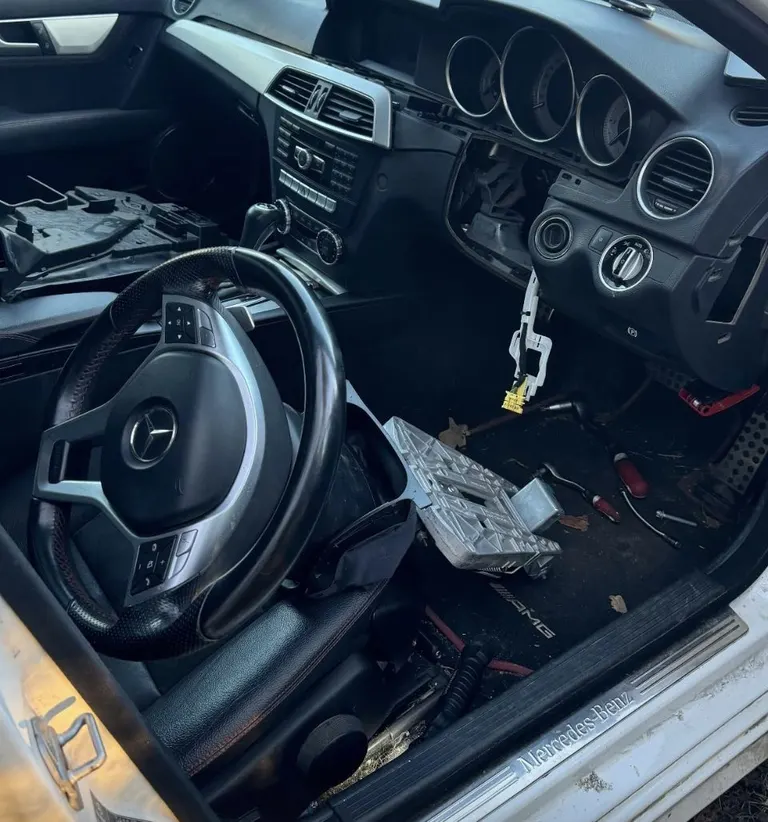
You get in, put the key in (or press Start) and… nothing. The steering wheel won't move, the key won't turn, or the dashboard lights up but the engine never cranks. It's one of the most stressful car problems, because the car looks fine and you have no idea where to start.
The good news: in most of these cases the engine is fine. The problem is in the parts that decide whether the car is allowed to start: the steering lock, the ignition and the immobiliser. These are exactly what we repair every day, and in most cases we can do it where the car is parked, without a tow truck or a trip to the dealer.
First, what are you seeing?
What happens | Most likely cause |
|---|---|
The key won't turn at all, and the steering wheel is solid | Mechanical steering lock jammed, or a worn ignition barrel |
Key goes in, nothing lights up, wheel stays locked (Mercedes) | Electronic steering lock (ESL) or EIS fault |
Dash lights up, an immobiliser or key light flashes, engine won't crank | The car doesn't recognise the key (immobiliser) |
Push-start car says "key not detected" | Weak key battery, damaged key, or a receiver fault |
Dash lights come on, a click but no crank | Usually the battery or starter, not the key: check this first |
Two-minute checks you can do yourself
Before you call anyone, try these. They solve more problems than you'd think:
- Wiggle the steering wheel while turning the key. If the wheels were turned against the kerb, the lock pin can be under pressure. Gently move the wheel left and right while turning the key. Don't force the key: a bent key is a bigger problem.
- Try your spare key. If the spare works, the problem is in the first key (chip, blade or battery), not the car.
- Look at the dashboard. A flashing key or padlock symbol usually means the immobiliser isn't reading the key. No lights at all can mean a flat battery.
- Push-start car? Hold the key fob right against the Start button (or put it in the backup slot, if your car has one) and try again. This works even with a dead fob battery.
- Check the battery. Dim interior lights or a fast clicking sound point to the battery, not the ignition.
If none of this helps, keep reading. Please don't keep cycling the key or pulling on the wheel; it can turn a repair into a replacement.
The electronic steering lock (ESL): a very common culprit
Many modern cars don't have a purely mechanical steering lock any more. Instead, a small motor drives a pin that locks the steering column, controlled by an electronic module: the ESL (electronic steering lock). When it fails, the car refuses to release the steering and refuses to start, even with a perfectly good key.
ESL faults are especially common on:
- Mercedes C-Class (2007–2014) and E-Class (2009–2016): classic symptoms are a key that goes in but won't turn and no dash lights.
- Volkswagen Passat (B6/B7) and Passat CC: "steering lock" warnings or no start.
- Renault Mégane and Scénic: "steering lock fault" messages on the dash.
Real jobs: Mercedes ESL repairs
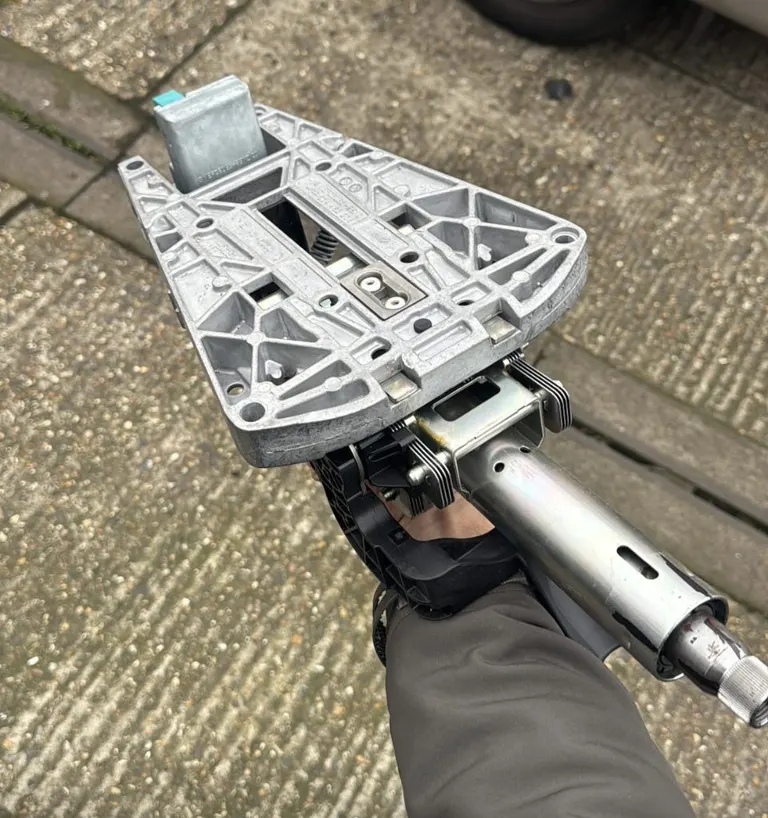
On a 2011 Mercedes E-Class and a 2012 Mercedes C-Class, both cars had the same story: the key went in, nothing happened, and the steering stayed locked. On these models the ESL sits on the steering column, so the column has to come out to get to it. We removed it on the spot, repaired the lock, refitted everything and checked that the car started and the steering released every time.
It looks dramatic, but for a specialist it's a routine job. The alternative many drivers are offered is a tow to the dealer and a new steering column, which costs far more and takes days.
The immobiliser: when the car doesn't recognise your key
Every modern key has a small chip (a transponder) that "talks" to the car. If the car can't read it, the immobiliser stops the engine from starting, even if the key turns. Common reasons:
- the chip inside the key is damaged (often after a drop or a wash);
- the key has lost its programming;
- the reader ring around the ignition, or a module behind the dash, has failed.
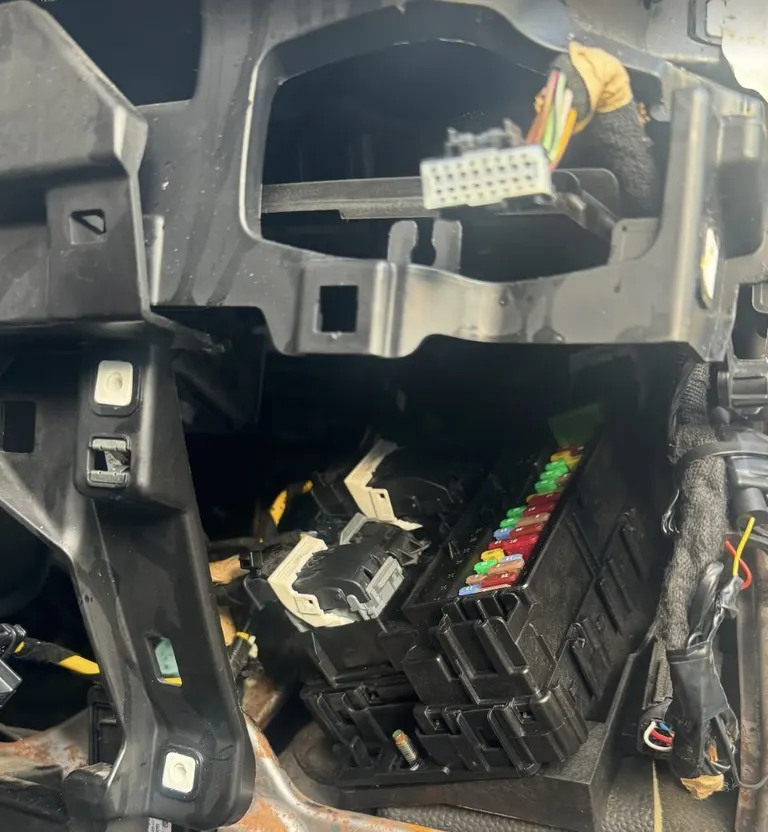
Sometimes the fault is deeper in the car's electronics. On a 2018 Ford Transit we replaced and programmed a faulty body control module (BCM), the unit that manages the van's electrics, including how it talks to the key.
The ignition barrel: when the key won't turn at all
On cars with a traditional key, the metal lock you put the key into (the ignition barrel) wears over the years. The first sign is usually a key that's stiff or only turns after jiggling. Eventually it stops turning at all. A worn barrel can usually be repaired or rebuilt on site, and your existing keys can often still be used.
What does it cost?
We always give you the price before we set off: you tell us the car and what's happening, and we tell you the cost. No surprises at the car. Typical starting prices:
- Ignition repair: from £150
- Steering lock repair: from £150
- Mercedes EIS repair: from £250
- ESL repair: from £300
The final price depends on the car and what's actually broken. A dealer will usually replace the whole unit; we repair it where we can.
When to call us
Call or WhatsApp us if:
- the steering wheel is locked and won't release with the key;
- the key won't turn, or turns but the car won't start;
- your Mercedes shows no lights when you put the key in;
- a "steering lock" or "key not detected" message won't go away.
We're mobile car locksmiths and ignition specialists covering South London and Surrey (SE, SM, CR, SW, KT and RH postcodes), 24 hours a day. Send us a photo of the dashboard on WhatsApp and we'll usually know what we're dealing with before we arrive.